Content Marketing in 2026: The Definitive Guide for Small Businesses

By Perry Stevens, Blend Local Search Marketing | May 2026
A Little Bit of History
How old do you think content marketing is? When someone first asked me that question, I thought it had been around for maybe 50 or 70 years. But when I looked a little closer and did some research, the answer was much different than what I would have guessed: content marketing is actually nearly 300 years old!
In 1732 Benjamin Franklin published his Poor Richard's Almanack with an advertisement on its back page announcing the launch of his new printing business. If only he would have known about TikTok :)
Key Stat: 72% of marketers say content marketing increases engagement, and content marketing costs 62% less than traditional marketing while generating 3x as many leads. In 2026, businesses that blog consistently see 67% more leads than those that don't. (Source: HubSpot, "State of Marketing", 2025; Demand Metric, "Content Marketing ROI Statistics", 2024)
TL;DR
- Content marketing is 300 years old and still the most cost-effective way to attract, educate, and convert customers.
- Know your audience, map their pain points, choose the right formats, and distribute where they already spend time.
- Video, webinars, and repurposed content multiply your reach without multiplying your workload.
- Measure ROI beyond just sales — track leads, engagement, SEO rankings, and brand awareness.
- For done-for-you content strategy and SEO-optimised content, contact Blend Local Search Marketing.
In this blog, we will explore the future of content marketing in 2026 and beyond. How will social media change? What about content discovery and consumption? We'll also discuss what trends to watch out for and how to prepare for these changes. Finally, we'll cover the best practices that are emerging now so you can be ready for what's coming next!

Whether you're just starting out with content marketing or have been using the same approach for a while, it never hurts to revisit your strategic plan and make sure it's up-to-date, innovative, and engaging. The key word here is "engaging." You want people reading what you are writing so they can see why their business should invest in your services.
How is Content Marketing Looking in 2026?
Tons of content marketing strategies exist today, but that wasn't the case in the beginning. In those days, there were only bandit signs and other traditional forms of advertising available to marketers. They had far more options than you think! They could play with words on their ads or use a picture instead; they could even decide where it would be placed geographically. The combinations seemed endless for this new form of marketing strategy which is why many people still consider it "virgin territory."
The General Rule of Thumb
When you're trying to reach your audience, it's important that you know where they are in their buying cycle and what type of content is most likely to resonate with them.
So we've mapped the stages of a person's journey through solving their problem onto three steps: mapping out the pain point; creating engaging content for that particular stage based on research into how people think about this issue at each step; then finally targeting those messages appropriately so as not to overwhelm or turn off potential customers who have solved some other problems but still need help with theirs.
So Where to Start?
The first question a content marketer should ask when developing their strategy is who will be reading it. The audience can vary from person to person, business to customer, or even depending on the time of day and country. That's why you'll want to consider how many different types of people your message may reach before deciding what type best suits them! You can start by creating an avatar much in the same fashion as the one below.
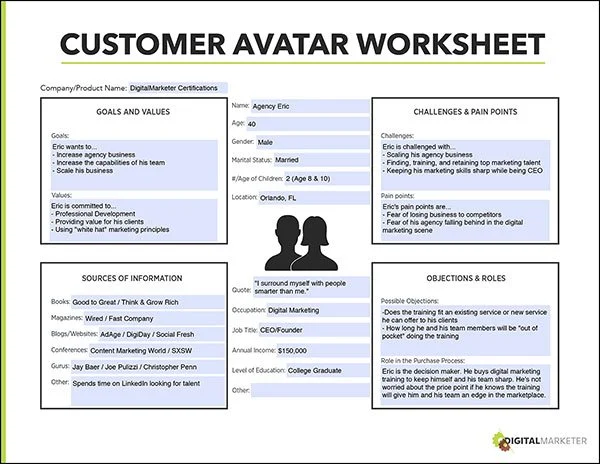
source: https://www.digitalmarketer.com/blog/customer-avatar-worksheet/
It's important to ask yourself these questions first:
Who is Your Audience?
Who is the primary type of person who might read this? What other types of people might also enjoy reading this blog post or story? Are there any specific groups you're targeting with your message in mind (for instance, a gender)? Who are you trying to reach out to as an author/creator?
What Problem Will You be Solving for Your Audience(s)?
Ideally, your product or service solves a problem the user knows they have and is causing them stress in their life. By educating the person on how to solve this issue through articles that speak directly to it, we are able to help people identify an aspect of themselves they might not even know was affecting them so deeply!
You can also give training and tutorials to help people who have already adopted the product to become more proficient users of it as well! In either scenario, it's important that the content reinforces how beneficial having this problem solved is by providing high-quality information on both sides of what you offer.
source: https://www.pinterest.com/pin/414049759471293307/
What Makes Your Business Unique?
It's important that you identify qualities about yourself and your company that set you apart from the competition.
For example, how do you make your product better or different from everyone else? This is where content comes in: with thoughtful writing and relevant information for customers who want more insight into what they're buying before making their decision (i.e., blog posts), companies can build an authentic brand identity — one of honesty and transparency while still highlighting why they are so much better at meeting customer needs versus other options out there on the market today.
In order to prove why you're worth buying from, have some unique stories ready!
What Content Formats Will You Use?
Different content formats can make your message easier to digest for different audiences. Deciding which format you want to use will depend on the audience, and what they're used to reading/watching online.
Videos are great if people would rather watch than read; blog posts work well when readers have a short attention span or just like scrolling through articles quickly (just don't forget links!). Infographics translate complex information into something that's easy to understand at first glance – but beware of oversimplifying things!
Where Will You Post Your Content?
Channels can be your own website and blog, or a social media site such as Facebook. How you use each is different depending on the type of content that you are creating (blog posts vs Facebook updates for example) so it's important to decide which channels best suit what style of writing before moving forward with publishing anything!
How Will You Publish?
The content creation and management process is crucial to keep your audience engaged. You need a plan for when, where and who will create the webpages or blogs – it's important not just in executing this but also making sure you're staying on top of publishing new pages as well as updating old ones with fresh information that resonates with readers' needs.
The good news is there are tons of tools that can aid you in this process, one we really like for all things social media is later.com.
How to Measure Content Marketing ROI
A content marketing ROI is the amount you earn from your content compared to what you spend. To work out this figure, keep track of how much money goes into creating and distributing that material plus what comes back in return.
For example, if $1 went into developing a blog post, but it was shared on six social media platforms (costing an additional $5 per platform) with each share generating at least one new follower or customer then there's been a 100% ROI ($6).
"If you earn more in sales than you spend on content production and distribution, then it's worth it."
But as we know, measuring content marketing success isn't just about money. Some of the other areas to pay attention to include:
Whether your content is generating leads. If people are responding and contacting you, then you have the prospect of making sales eventually (depending on what type of business).
You can measure this by checking Google Analytics data and looking at how traffic responds when new posts go live, which eCommerce platform is being used, social media response rates (likes/shares), SEO rankings from SEMrush and Moz Link Explorer tools. Prominence through AI will help too!
Content Marketing Tactics
Content Curation
Content curation tools are a great way to solve your content marketing woes. With these tools, you can benefit from the latest and greatest without having to create it yourself which saves time, effort, and money!
Some of my favourite free content curation tools include Flipboard (which lets you create digital magazines), Klout (provides shareable recommendations for boosting social influence) as well as Listly, Nuzzly, and Pinterest.
Gated Content
This is a type of blog post that you put out there for free, but only after visitors have opted into your email list.
It's something bloggers should take advantage of, since it could help bring more traffic and subscribers on board with their site too. Apart from blog posts though, gating can be applied as well! News articles are one way this tactic is used – all the visitor has to do is opt-in before they can see what's behind the gate next door (or article). If it doesn't work so well here though, try white papers or research instead; people like knowing about new information – especially if it's relevant to them and will make their life easier somehow? There are also webinars/videos.
Content Repurposing
Marketers are always looking for new ways to make their content more interesting and engaging. One of the most common techniques is called "content repurposing," where you take existing content that has proven successful and reuses it in another format with a different audience.
This can help solve two key problems: one being generating enough new quality material each month; the other extending your reach beyond just social media marketing channels like Facebook ads or Google search engine optimization (SEO). There are many types of content-repurposing methods available including syndicating posts on sites such as Outbrain, Zemanta, Taboola etc.
Republishing the same article across different sites such as Medium lets your work be seen by new audiences who may have missed it before in addition to showcasing it more prominently than just one website could offer alone. You'll also get traffic from links back up into your site over time with this strategy! And when sharing things online – even if they've been shared many times before – it's always important to give credit.
FOMO
FOMO (Fear of Missing Out) is one of the best ways to make visitors anxious to download your lead magnet, or buy more things. We're psychologically primed for it with 69% of millennials affected by FOMO. There are some other people who also suffer from it too: almost half of social media users suffer with high levels of anxiety because they're worried about missing out on something they might see or hear when scrolling through their feed!
BUT
FOMO is a powerful marketing tool. Use it with caution, and only when you want to create urgency in your audience – like on Black Friday or Cyber Monday.
Urgency
Urgency is a useful marketing tactic that plays in human psychology. Urgent situations make us want to act, and urgency can also be related to FOMO. Tips for using urgency include: don't overuse it or else people will lose interest; use active language like "book now" when prompting readers with CTA buttons on your website; repeat the urgent language throughout email subject lines and the pre-header text as well.
Urgency only works if you are trying to market something important enough so people care about acting immediately – otherwise, they won't feel urged by time constraints alone!
Video
Is video really the future of content marketing? Let's find out. In fact, the number of businesses that use video as part of their marketing is up 38% since 2017 and 72% say they prefer videos over text-based content.
So if you want to get started with a new tactic for your business or double down on what you're already doing video may be for you.
1) Your intro to your video is the key. You want it short and sweet, but still encapsulate everything that you are trying to say in a few seconds. People's attention spans these days don't last much longer than 15 seconds, so if they can get what you're going for within this time frame then chances are really high that they'll keep watching! And there's evidence too: YouTube has said "a strong first 15 seconds can 'keep viewers watching'" – so make sure yours does just that by nailing your mini introduction with style today!
2) Facebook video posts are a thing. So are Instagram Reels. But if you want to get the most eyeballs on your content, YouTube is where it's at! Why? First of all, YouTube has over 1 billion users per month and 3 billion hours of videos watched each day – that's more than Facebook or Twitter combined! And best yet: You can upload a video once and still gain views years after posting. To maximize viewership start by creating engaging titles for your videos; tagging friends in them; getting feedback early on such as likes/comments before uploading so you know what resonates with viewers; making sure subtitles work well with hearing-impaired individuals.
3) Work off a script. It's intimidating to be in front of the camera. But that changes when you read from a script and you stop worrying about what to say or how to do it! Plus final videos come out super crisp because you were just reading off lines off paper instead of trying not to mess up while talking.
4) Optimise for suggested videos. How many videos does YouTube suggest you watch on a daily basis? If the answer is "a ton", then I'm with ya. Optimizing for a suggested video might be just what your content needs to get seen by more people and exponentially grow views, subscribers, and conversions! The best way to optimize your video on the Suggested Video section? Add some text that tells what you're talking about and gives them an idea of what they should watch next.
Webinars
Webinars are an excellent way to educate your customers and build relationships. One of their best features is convenience, which you can also use as a selling point for potential prospects who might be more interested in learning about the product or service versus taking time out from work (or other responsibilities). Webinar attendees get immediate access to information that they would otherwise have had to go through all sorts of hoops just trying to figure it out on their own at home; plus there's socialization with like-minded people participating online!
And this study proves how successful webinars really are: 59% of B2B marketers are using webinars (up from 46% last year) and 61% believe that webinars are an effective content marketing tactic.
About the Author
Perry Stevens is the founder of Blend Local Search Marketing, a Singapore-based agency that helps small businesses create and distribute content that attracts, educates, and converts. With over 15 years in digital marketing, he has developed content strategies for businesses across the UK, USA, and Southeast Asia — from blog posts and videos to webinars and gated lead magnets that actually generate qualified leads.
FAQ
How often should I publish content?
Consistency beats frequency. For most small businesses, 1-2 high-quality blog posts per week is better than 5 rushed ones. If you can only manage 1 per month, make it comprehensive and highly valuable. Quality and consistency matter more than volume.
What content format gets the best ROI?
It depends on your audience, but in 2026 the highest-ROI formats are: video (especially short-form for social), comprehensive guides (2,000+ words), and webinars for B2B. For local businesses, Google Business Profile posts + review responses often deliver the fastest visibility return.
Should I gate my content or give it away free?
Give away 80% of your content for free to build trust and SEO. Gate only your highest-value assets: comprehensive guides, toolkits, exclusive research, or detailed case studies. The free content gets them to your site; the gated content captures the most engaged leads.
How do I repurpose content without looking lazy?
Repurposing isn't lazy — it's smart. A single blog post can become: a Twitter thread, a LinkedIn post, an Instagram carousel, a YouTube video script, an email newsletter, a podcast episode, and a PDF guide. Each format reaches a different audience. Just adapt the message for the medium — don't just copy-paste.
What's the #1 content marketing mistake small businesses make?
Creating content without a distribution plan. Great content that nobody sees is wasted effort. Before you write a word, know where it will be shared, who will promote it, and how it will reach your target audience. Content creation is 50% of the job — distribution is the other 50%.
Conclusion
If you've been biding your time and waiting for the right moment to start a content marketing campaign, it might have already arrived.
The world is growing noisier by the day, which means that if you want to stay on top of things in any industry (especially ours), then storytelling will become even more crucial than ever before.
Content marketing has never been easier or cheaper thanks to platforms like WordPress and AI tools – allowing anyone with an internet connection access to tools they can use at their own convenience without having to spend thousands of dollars upfront.
We know how overwhelming this information may be so feel free to contact us anytime, so together we can create your strategic plan for success through SEO and digital advertising strategies that make sense for your company.
Need help with your content strategy?
Our Content Marketing Service includes blog writing, SEO optimisation, and conversion-focused articles that attract and convert local customers.
Explore Content Marketing